Royal Gorge Region Small Water Opportunities
Grape Creek
General Overview
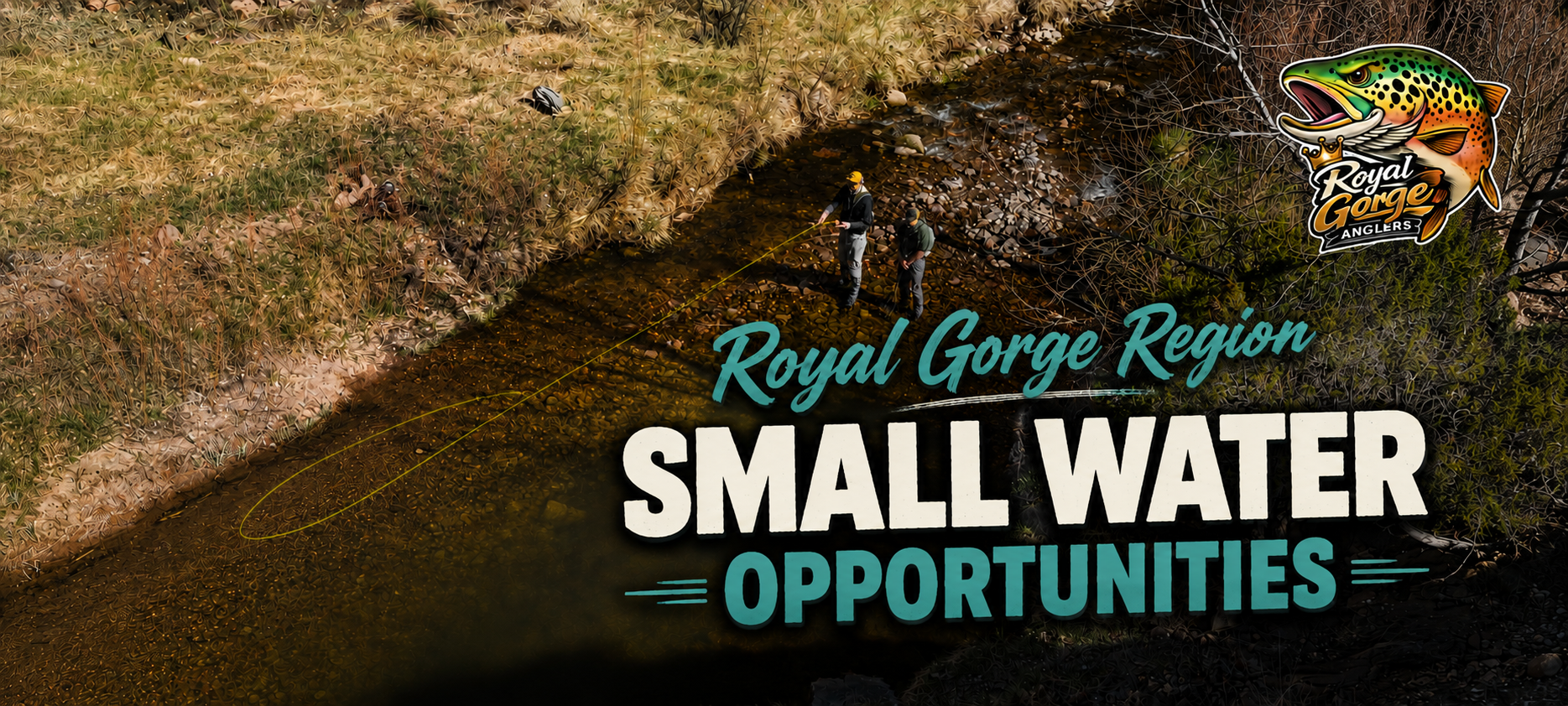
Grape Creek is one of our favorite local small-water options and provides a dramatically different experience from the Arkansas. This is technical water where stealth, presentation and reading holding water are generally much more important than complicated rigging.
Flows below DeWeese are controlled by reservoir releases and can change significantly depending on irrigation demand. As we move through the summer, focus on the cooler portions of the day and pay close attention to water temperature. Depth, moving water, undercut banks and shaded structure should be your focal points.
Conditions
Current Flow: 23 cfs
Water Level: Low / Variable
Clarity: Clear
Primary Activity: Caddis, Mayflies, Midges & Terrestrials
Suggested Methods
Keep it simple. Single dries and light dry/dropper rigs are generally our preferred approach. Caddis, small attractor dries and terrestrials make excellent lead flies. If fish aren't consistently looking up, trail a Caddis Pupa, small Mayfly nymph, Perdigon or Midge pattern. As we move deeper into summer, Ants, Beetles and small Hoppers become increasingly important. Focus these patterns around grassy banks, overhanging vegetation and structure.
Longer leaders, light tippet and a careful approach are important. On water like Grape Creek, your first presentation into a good piece of holding water is often your best one.
Middle Fork of the South Platte
General Overview
The Middle Fork of the South Platte provides a completely different experience from the tailwaters further downstream. This is classic South Park freestone fishing, with a mix of riffles, bends, deeper runs, undercut banks and beaver-influenced habitat.
Conditions on the Middle Fork can fluctuate considerably with runoff, irrigation demand and seasonal water temperatures, so flow and temperature should dictate your approach. During the summer, lower-light periods are generally going to provide your best opportunities, particularly when flows get low and the water becomes clear. Your existing RGA material describes the Middle Fork as a classic freestone system where flow, temperature, clarity and hatches can be considerably less predictable than the South Platte tailwaters.
Conditions
Current Flow @ Alma: 5 cfs
Water Level: Low / Seasonal
Clarity: Generally Clear
Primary Activity: Tricos, Caddis, Yellow Sallies, BWOs, Midges, Hoppers & Terrestrials
Suggested Methods
Dry/dropper should be a focal approach through much of the summer. Start with a Hopper, small Chubby-style attractor, Caddis or other buoyant dry and trail a Caddis Pupa, Yellow Sally nymph, Pheasant Tail, Perdigon or small BWO pattern. Tricos can become particularly important during the morning window. When you see consistent surface activity, be prepared to ditch the dropper and fish Trico adults and spinners to actively feeding fish. As terrestrial activity builds, don't overlook Hoppers, Ants and Beetles—particularly around grassy banks and undercut structure.
This is also water where covering ground pays off. Rather than spending excessive time on one fish or run, focus on high-percentage holding water and keep moving.
Dream Stream — Charlie Meyers State Wildlife Area
General Overview
The Dream Stream needs very little introduction. The South Platte between Spinney and Eleven Mile Reservoirs is one of Colorado's best-known tailwaters, capable of producing exceptional trout and seasonal lake-run fish. CPW manages this section as artificial flies and lures only, with all fish immediately returned to the water. The tradeoff is fishing pressure. These trout see a tremendous number of anglers, making presentation, appropriate tippet, depth and understanding the current insect lifecycle much more important than simply having the right fly.
Summer fishing revolves around the smaller aquatic insects that make the South Platte famous, but don't overlook terrestrials or larger food sources when conditions warrant.
Conditions
Current Flow: 95 cfs
Water Level: Controlled Tailwater
Clarity: Clear
Primary Activity: Tricos, Caddis, BWOs, Midges, Yellow Sallies, Scuds & Terrestrials
Suggested Methods
Technical nymphing remains the most consistent approach. Double-nymph rigs, whether under an indicator or fished tightline, allow you to precisely control depth and presentation through the deeper runs and feeding lanes. Build your subsurface selection around Trico nymphs and emergers, small Caddis Pupa, BWOs, Midges and Scuds. Adjust depth and weight before assuming your fly selection is wrong. During strong Trico activity, the game can change quickly. Watch for fish beginning to consistently feed near the surface and be prepared with Trico adults, emergers and spinners. The spinner fall can provide some of the most technical—and rewarding—dry-fly fishing on the river. Terrestrials can also become relevant through the summer. Hoppers and Ants are worth having available, particularly during windy afternoons.
Above all, don't crowd other anglers or repeatedly pound resting fish. There's plenty of water to explore, and covering ground can often be more productive than joining the crowd around a handful of obvious fish.
South Platte River Elevenmile Canyon
General Overview
Elevenmile Canyon is one of the most consistent and technically rewarding sections of the South Platte. Cold water released from Eleven Mile Reservoir provides a productive year-round tailwater fishery surrounded by some spectacular granite canyon scenery.
This is heavily pressured water, and the trout behave accordingly. CPW specifically describes these fish as discerning because of the popularity and accessibility of the fishery, recommending light tippet, small flies and precise presentations. The regulated section extends approximately 3.8 miles downstream from Eleven Mile Dam and is artificial flies and lures only and catch-and-release for trout.
Conditions
Current Flow: 103 cfs
Water Level: Controlled Tailwater
Clarity: Clear
Primary Activity: Tricos, Caddis, BWOs, Midges & Yellow Sallies
Suggested Methods
We're leaning heavily on technical nymphing and precise dry-fly presentations in the canyon. For the subsurface game, concentrate on Trico nymphs and emergers, small Caddis Pupa, BWO nymphs and emergers, Midges and other appropriately sized South Platte patterns. Double-nymph rigs under a small indicator are extremely effective, but tightline techniques can be equally productive in the right water.
Pay close attention to depth and weight. These fish see plenty of flies, and getting a natural presentation at exactly the right depth is generally more important than constantly rotating through patterns. During morning Trico activity, keep a dedicated dry-fly setup ready. When fish begin feeding consistently on top, Trico adults and spinners on long leaders and light tippet can produce excellent sight-fishing opportunities. Caddis and Yellow Sallies can also create opportunities, while BWOs become increasingly important as weather and seasonal conditions begin moving toward fall. The canyon rewards anglers who slow things down. Read the water carefully, identify feeding fish and make deliberate presentations rather than simply covering every piece of water with the same rig.
Fourmile Creek
General Overview
Fourmile provides another interesting small-water opportunity close to Cañon City. Summer conditions generally mean low, clear water and trout concentrated around the best available habitat. Gauge observations upstream near Victor have recently been down into the single-digit CFS range, which means anglers need to be particularly conscious of water temperature and available habitat.
Pocket water, undercut banks, shaded edges, deeper plunge pools and areas with better current are all worth your attention. This is a fishery where staying mobile and covering water generally beats camping on one spot.
Conditions
Current Flow: 1 cfs
Water Level: VERY Low
Clarity: Clear
Primary Activity: Caddis, Mayflies, Yellow Sallies & Terrestrials
Suggested Methods
Dry/dropper is our focal method. Start with a buoyant attractor, Caddis or terrestrial and trail a lightly weighted Caddis Pupa, Mayfly nymph or Yellow Sally pattern. There isn't much reason to overload these fish with weight. Concentrate instead on a clean, natural drift through relatively shallow holding water.
If you begin seeing fish consistently looking up, cut the dropper off and fish the dry. Caddis, small Mayflies, Yellow Sallies, Ants and Beetles can all be productive.
Beaver Creek
General Overview
Beaver Creek is classic small-stream fishing where presentation and approach are everything. The drainage is running very low this summer like others. This is not water we recommend pushing when temperatures become marginal. If conditions aren't right, give these fish a break and head somewhere with more water.
Conditions
Recent Observed Flow @ Beaver Creek Cemetary: 10 cfs
Water Level: Low
Clarity: Clear
Primary Activity: Caddis, Mayflies, Midges & Terrestrials
Suggested Methods
A single dry or very light dry/dropper should cover most situations. Small Caddis, attractor dries, Ants and Beetles are excellent surface choices. Below the surface, focus on small Caddis Pupa, Mayfly nymphs and Midges.
At these flows, stealth becomes extremely important. Stay low, minimize false casting and don't repeatedly pound small pockets.
Badger Creek
General Overview
Badger Creek is another exploratory small-water option and can be a fun change of pace when conditions line up. This is a beautiful Spring Creek very unique water!
Like much of our smaller water, expect relatively low and clear conditions during the late-summer window. Fish the best available habitat and don't overlook surprisingly small pockets that provide depth, shade or structure.
Conditions
Level: Low
Clarity: Clear
Primary Activity: Caddis, Mayflies, Midges & Terrestrials
Suggested Methods
Keep the rig light, simple and stealthy. Dry/dropper is a great searching approach, but we're perfectly happy fishing a single dry when fish are willing to look up. Caddis, Mayflies, Ants, Beetles and small Hoppers should cover the surface game.
Below the surface, concentrate on small Caddis Pupa and Mayfly nymphs.
Hayden Creek
General Overview
Hayden Creek, just south of Coaldale, is one of the more unique small-water fisheries in the region. This high-gradient drainage offers classic pocket-water fishing in a beautiful mountain setting and rewards anglers who are willing to stay mobile and make accurate presentations into relatively small pieces of holding water.
Hayden Creek also has an important fisheries history. The drainage was home to a genetically unique population of cutthroat trout that was threatened by the 2016 Hayden Pass Fire, leading Colorado Parks and Wildlife to undertake an extensive rescue and restoration effort. Because of that history, we encourage anglers to approach this fishery with an especially strong conservation mindset.
Conditions
Water Level: Low / Seasonal
Clarity: Generally Clear
Primary Activity: Caddis, Mayflies, small Stoneflies & Terrestrials
Suggested Methods
This is quintessential small-water dry fly and dry/dropper fishing. A small attractor dry, Caddis or terrestrial gives you a great searching pattern, with a lightly weighted Mayfly nymph, Caddis Pupa or small attractor nymph underneath when necessary. Spend less time changing flies and more time thinking about approach, presentation and holding water. Pocket water, plunge pools, undercut banks and areas where faster current meets softer water should receive most of your attention.
As flows decrease, keep your rig increasingly simple. A single dry can be all you need, particularly when Caddis or terrestrial activity has fish looking toward the surface. Keep fish handling to an absolute minimum and move on when water temperatures or conditions become marginal.
Hardscrabble Creek
General Overview
Hardscrabble Creek near Wetmore gives anglers another interesting small-water option east of the Wet Mountains. The drainage transitions through a variety of terrain, and much of the surrounding land is privately owned, making access awareness every bit as important as fishing technique. Publicly available information for the Wetmore area specifically notes substantial private ownership around Hardscrabble Creek.
When legal access and conditions line up, approach Hardscrabble as technical small water. Summer flows can become limited, and fish will increasingly concentrate around the best combinations of depth, current, shade and cover.
Conditions
Water Level: Low / Seasonal
Clarity: Generally Clear
Primary Activity: Caddis, Mayflies, Midges & Terrestrials
Suggested Methods
We're keeping things light and simple on Hardscrabble. Start with a single dry or short dry/dropper rig featuring a Caddis, small attractor or terrestrial on top. If you need to get subsurface, a small Caddis Pupa, Mayfly nymph, Midge or lightly weighted attractor should be plenty. Heavy rigs aren't necessary on this type of water and can make presentation more difficult. As summer progresses, Ants, Beetles and small Hoppers become increasingly relevant. Fish them tight to banks, vegetation and shaded structure and make your first cast count.
Most importantly on all small water venues, know where you're fishing. Respect private property and posted access, and don't assume that a stream crossing a road means the surrounding water is open to public fishing.
LEARN TO FISH SMALL WATER
Small-water fly fishing is one of the best ways to sharpen the fundamentals that make you a better angler everywhere. Success on these intimate fisheries is less about complicated rigs and more about stealth, accuracy, presentation and learning to quickly identify high-percentage holding water. Understanding how trout use pocket water, undercut banks, plunge pools, structure and current seams can completely change the way you approach a stream. Our guides specialize in hands-on instruction designed to teach you not simply what to fish, but how to read the water, approach it effectively and understand why a particular presentation works.
Whether you want to improve your dry/dropper game, become more accurate in tight casting situations, learn to fish terrestrials effectively, or simply become better at finding trout on smaller water, a day with one of our guides can dramatically shorten the learning curve.
Slow down. Read the water. Make the first cast count.
Call us to discuss guided instruction at (719) 371-4530